
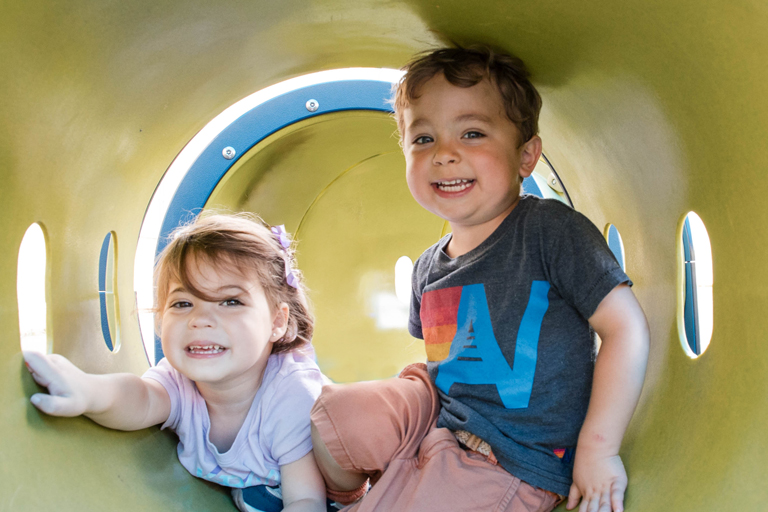
Starting preschool is a meaningful milestone for children and families. For many children, it is their first regular experience in a classroom community—a place to make friends, communicate their needs, solve small problems, and build confidence away from home.
Getting ready for preschool is not about arriving with every letter memorized or every skill mastered. It is about helping children feel safe, curious, and ready to participate.
The Marjorie & Lewis Katz JCC supports children through nurturing relationships, hands-on learning, play and age-appropriate routines. Our childcare and preschool programs are designed to help children build a strong foundation for kindergarten while developing confidence, curiosity, and a lifelong love of learning.
What Does Kindergarten Readiness Really Mean?
A preschool program that prepares children for kindergarten supports the whole child. Early learning includes emerging literacy and math skills, but it also includes social-emotional growth, independence, language development, physical activity and learning to participate in a group.
The National Association for the Education of Young Children (NAEYC) encourages families to look for programs that are safe, nurturing, and responsive to children’s development and learning. Developmentally appropriate practice means meeting children where they are while considering their individual stage of development, family, language and culture.
This whole-child approach is an important part of early childhood learning, where children are encouraged to explore, create, communicate, and develop independence through age-appropriate experiences.
As children move toward kindergarten, they benefit from opportunities to practice:
- Following simple routines and directions
- Taking turns, sharing space and playing alongside peers
- Naming feelings and asking an adult for help
- Washing hands, using the bathroom and managing belongings with growing independence
- Listening to stories, talking about ideas and experimenting with early writing, numbers, art and music
- Working through frustration and trying again
These everyday experiences are an important part of preschool readiness and help children develop the confidence they need for their next step.
Getting Ready for Preschool at Home
Families do not need to turn home into a classroom to help a child prepare for preschool. Small, consistent routines can make the transition feel more familiar and manageable.
Talk positively about school before the first day. Explain what a typical day might include: saying goodbye, playing, having a snack, listening to a story, spending time outdoors and reuniting at pickup.
If possible, visit the school together, attend orientation or spend time near the playground so the setting feels less new. The American Academy of Pediatrics recommends visiting a new school or classroom before the first day when possible and helping children anticipate the positive parts of starting school.
For families considering the Katz JCC, scheduling a tour of our Early Childhood Education Center is a great way for parents and children to see the classrooms, learn about a typical day and become familiar with our school community.
Simple Ways to Prepare Your Child for Preschool
Try these simple preschool-prep activities at home:
- Practice a brief, confident goodbye routine with a trusted caregiver
- Read books about beginning school, then talk about what the characters may be feeling
- Play “school” at home by putting away a backpack, listening to a short story or cleaning up toys together
- Encourage self-help skills, such as putting on shoes, opening food containers, using utensils, brushing teeth and washing hands
- Build language through everyday conversation by asking your child what they notice while walking, cooking or shopping
- Make time for unstructured play. The American Academy of Pediatrics identifies play as important to children’s cognitive, physical, social and emotional well-being
Remember, getting ready for preschool is about building confidence and familiarity, not checking off a list of academic skills.
What to Look for When Choosing a Preschool
Choosing a preschool is an important decision for your family. Whether you are looking at a preschool, childcare or daycare program, a visit can give you a better sense of the environment and help you determine whether the program feels like a good fit for your child.
As you tour different preschool programs, consider:
A Warm, Welcoming Environment
Does the classroom feel calm, welcoming, and engaging? Do teachers get down to the children’s level and respond warmly to them?
Families should be encouraged to visit the facility in advance to experience our classrooms and learning environment firsthand.
Opportunities to Learn Through Play
Young children learn through hands-on experiences, exploration, and play. Look for a program that balances teacher-guided activities with opportunities for children to make choices, explore and interact with their peers.
Learn more about our approach to early childhood learning and how play, exploration and hands-on experiences are incorporated into the day at the Katz JCC.
Caring and Experienced Teachers
Ask about the teachers’ experience and education. Pay attention to how teachers communicate with children and with one another. Strong relationships between children and educators are an important part of early learning.
When exploring a program, take time to meet and learn more about the educators who help create a nurturing and engaging environment for Katz JCC students.
Age-Appropriate Routines
Preschool children are developing independence every day. Look for opportunities for children to practice routines such as cleaning up, washing hands, managing belongings, and transitioning between activities.
Communication With Families
A strong preschool program views families as partners. Ask how teachers communicate with parents and how you will learn about your child’s day, progress, and experiences.
A Focus on the Whole Child
Kindergarten readiness involves much more than recognizing letters and numbers. Look for a program that supports social-emotional development, language, physical activity, creativity, independence, and early academic skills.
Questions to Ask When Choosing a Preschool
You do not need to know all the “right” questions when visiting a preschool. Start with the things that matter most to your family.
Consider asking:
- “What does a typical day look like for my child?”
- “How do you help new children feel comfortable when they first start?”
- “What kinds of activities do the children do during the day?”
- “How do children learn through play?”
- “How will I hear about my child’s day and how they are doing?”
- “What happens if my child is having a hard time sharing, separating at drop-off or managing big feelings?”
- “How much time do the children spend playing outside or moving their bodies?”
- “How do you help children get ready for kindergarten?”
- “How many children are in each class, and how many teachers are with them?”
- “Can you tell me a little about the teachers’ experience and background?”
- “How do you communicate with families about their child’s development?”
- “What opportunities are there for children to practice independence?”
These questions can help families understand not only the structure of a program, but also the care, communication, and community their child will experience each day.
Every Child Develops at Their Own Pace
A thoughtful preschool program recognizes that every child develops at an individual pace. One child may confidently walk into the classroom on the first day while another may need more time and reassurance.
The right preschool setting gives children room to explore while providing the dependable structure and caring relationships that help them grow.
Preparing for preschool should not be about comparing your child with other children. Instead, focus on helping your child develop confidence, independence, communication skills and a sense of belonging.
Preschool Is a Partnership Between Home and School
Preschool is strongest when home and schoolwork together. Families know their children deeply, while educators bring professional knowledge of child development and early learning. Ongoing communication helps everyone support a child’s confidence, independence, and sense of belonging.
“Preschool is where children begin to see themselves as part of a larger community,” says Amanda McGowan, Early Childhood, Camp & Youth Engagement Director at the Marjorie & Lewis Katz JCC. “When children are welcomed with consistency, care and opportunities to explore, they develop the confidence that supports them as they move toward kindergarten.”
Looking for Preschool in Margate, NJ?
Families searching for preschool, childcare or early childhood education in Margate and the surrounding South Jersey community are invited to discover the Katz JCC.